Ryan Eras from the Ezra Institute for Contemporary Christianity has a great interview with Peter Jones on Paganism. Jones is known for his identification of “one-ism” and “two-ism” as markers for paganism compared to Christian theism.
Download here.

Keeping the Porch Light on in a Dark World
Ryan Eras from the Ezra Institute for Contemporary Christianity has a great interview with Peter Jones on Paganism. Jones is known for his identification of “one-ism” and “two-ism” as markers for paganism compared to Christian theism.
Download here.
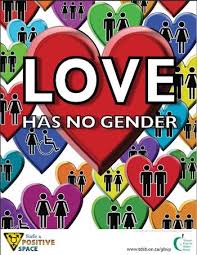
Christians have long and loudly protested the fruit of the sexual revolution: promiscuity, abortion, easy divorce, rejection of marriage and the redefinition of marriage. In the past couple of decades, the same-sex relationships have moved to the front, since all other battles have been settled. The argument is “love is love” or “love has no gender.” At this point in our history, love has no gender, no number (polygamy), no age (pedophilia), no biological similarity (incest) and no species (bestiality). These last three require some more work but rest assured the desired results are in the hands of the experts.
These aberrations have and are resisted by Christians, and this resistance, this non-conformity will continue. This, in spite of traitors, turncoats, and wolves in our midst (Acts 20, Jude, and much in the Gospels). I assume if you are reading this as a Christian you have some basic Biblical literacy and won’t rehearse all the arguments here.
We often believe that we are the enemy of this enlightened, progressivist thought, and we’d be correct. They really do hate us, which is the normal, default position (James 4:4, 5).
But the “love is love” position has another enemy: itself, or rather, the worldview that gave it birth.
Either the universe and everything in it is created by God (who is not a part of it), created for a purpose and ultimate end, or it is a product of blind chance, and any “meaning” assigned to it by itself (humans) is irrational and arbitrary. These are the only two options, and the second one is not pretty.
In a universe that is a product of random material and energy, material and energy is all that there is. There can be nothing else. The nothing else is “meaning,” “purpose,” and yes, “love.” Love is not a real thing, but something that raw materialism has somehow constructed and can be dispensed with without harm to the universe.
The evolutionary materialism that supplied a rejection of a transcendent Creator (God is not only unnecessary in materialism but irrational) also gave birth to the removal of sexual boundaries; thus the fruit of the sexual revolution. It makes no sense whatever in materialism to restrict relations between any products of materialism (that is, living organism, or even non-living organisms). All such boundaries are, we are being told, “social constructs.” Indeed. This is the whole point.
How is this an enemy of the LGBTQ+++ community? Isn’t it great that social constructs can be re-written? Yes, it is wonderful for them now, but if transcendent meaning is removed (and we say it has), then what is the ultimate meaning for all things?
Think about three films: Mad Max, 1984, and Book of Eli. What do they all have in common? The world of sanity and order have collapsed into a dystopia, a tyranny ruled by one man, a party, or a gang. Postmodernity does not exist in these stories, because postmodernity lacks the one thing that evolutionary-materialism must have: power.
In a world where everything is reduced to material and energy, material and energy are, in their most basic sense, power. Filmmakers and novelists rightly see that power is the construct that defines all constructs.
When we see posters, “love is love” and “love has no gender” we see a rejection of Christian morality. But we also see a fear of the power of others to end the party. One does not have to be a Christian to reject the LGBTQ++ dogma. Biological science does that. So does Islam. So do policymakers who want to see the human race continue. There are many non-Christian enemies of the LGBTQ++ agenda, and they will soon be known.
For now, the sexual revolution enjoys popularity and has no qualms about using its power to quell dissent. But power is in the hands of whom? Power belongs to the majority, and the nature of that majority can shift quickly. History tells us that majorities are rarely compassionate outside of a Christian consensus.
Christians aren’t their only enemy. The same worldview that threw off the shackles of historic Christianity is the same one that will someday declare their “love is love” vision to be problematic. If unprincipled power is a weapon in your hand, it can kill and destroy your enemy and yourself. “Unprincipled power? No, we have principles.” No, you do not have principles. In your worldview, you have matter and energy, period. You can’t add principles to that (or love) and then arbitrarily call other principles off limits. The worldview that birthed the sexual revolution can also birth a revolution that calls for its violent extermination; indeed, unless the West re-embraces the Christian faith in a real way, this is more a certainty than not. No committed materialist should be bothered by this (there are no “shoulds” anyway in this system). But we want love!
If love is merely a social construct, as it most certainly is in a post-rational, post-Christian world, “love is love” has to be shouted and displayed loud, constantly, and with great force and clarity, out of fear alone. The next leap forward in evolution see lovers as an impediment.
The Christian faith wishes to save both the individual and love itself, but this is a whole package: only through a confession of a Creator God, Lawgiver, Judge, and Redeemer in Christ is this possible.
“But, you see, I have this friend (or son, daughter, cousin, aunt, uncle, brother, sister, parent, neighbour) who is gay.” “I have a niece who is marrying her girlfriend, and I just received the wedding invitation.” “My son says that he always has felt that he should be a female.” “My daughter has moved in with her boyfriend. They say they are not yet ready for marriage.” “My business partner has left his wife and children for a young woman.” There can be a long list here of situations; I cannot complete such a list
Translated: “I am a Christian, and I know what the Bible says, but . . . what do I do?”
These raise questions: “Do I attend the wedding?” “Do my out of town guests sleep in the same bed?” “Do I buy women’s clothes for my son? Do I complement his wardrobe? Do I encourage hormone therapy and surgery?”
“And, I am a Christian. What am I supposed to do?”
Some of you can stop reading right here. If you are presently on board with the entire LGBTQ+ movement, this article isn’t really for you. There are things you should read, and I hope to contribute some items later. But you will not agree with much that I write here. Rather, this article is intended to speak to Christians who make a conscious effort to take the Bible seriously, and who do not argue against the correctness of the Biblical view of sexuality (and yes, I do believe that those who are sympathetic to what God calls abomination, do not take the Bible seriously). This blog post is for those who are felt pulled between the commands of God in Scripture, and the affection toward family and friends. This article is for those who do believe that sex is reserved for a heterosexual marriage covenant, but who find that commitment painful.
Now that I’ve properly offended and burnt bridges, let’s consider some very basic principles:
Solomon said,
“What has been is what will be,
and what has been done is what will be done,
and there is nothing new under the sun. Ecclesiastes 1:9.
This means that at the very least, you are not the first person who loves God who feels pulled to love someone in disobedience to Him. You feel harsh in refusing to accept and embrace a person who is living a life contrary to Scripture. If this is not a new problem, it also means that humans have not really created any new ways to offend God. We have, however, made those ways publicly available in ways unheard of in previous generations. What was once done and said in secret is now, literally, proclaimed in the streets and from rooftops.
Jesus made it very clear that the greatest commandment, indeed all of God’s commands, are to be taken at face value, and taken seriously:
Matthew 22:37 And he said to him, “You shall love the Lord your God with all your heart and with all your soul and with all your mind (quoting Deuteronomy 6:5; also see Mark 12:30; Luke 10:27).
Matthew 22:39 And a second is like it: You shall love your neighbor as yourself (citing Leviticus 19:18).
Matthew 5:18–19 For truly, I say to you, until heaven and earth pass away, not an iota, not a dot, will pass from the Law until all is accomplished. 19 Therefore whoever relaxes one of the least of these commandments and teaches others to do the same will be called least in the kingdom of heaven, but whoever does them and teaches them will be called great in the kingdom of heaven.
To apply these three passages means that there are hard choices to make in life. Again, let’s be reminded that these challenges are not new. Christians have always had to make difficult decisions, decisions that are costly even to the point of death. We who live at this present time are no exception. Being faithful can cost a human love.
The Bible asserts repeatedly that 1) there is one God; 2) it isn’t us. Governments, schools, media and all, have repeatedly asserted their authority over what determines a human life (abortion), when that life may end (euthanasia) and what it means to be human—gender fluidity. The Bible calls this kind of behaviour, idolatry, and the Christian can have none of it. Read Romans 1:18ff for an interesting description of its outcome.
Our first love, our affection and interest, must be God. It is our goal, our duty, our love, to please God. In any and all kinds of human relationships, this is the foundation, the starting-point; and this has consequences.
Jesus said that, to be His disciple, we must even hate our families:
Luke 14:26 If anyone comes to me and does not hate his own father and mother and wife and children and brothers and sisters, yes, and even his own life, he cannot be my disciple.
This passage is a hard one, not to understand, but to apply. The Bible as a whole tells us that we are to love our families, and honour our parents. But whatever else can be said about this difficult passage, it is clear: that if we love God, our own families will see our love of God as an act of hate. A Christian, being faithful to the God of Scripture, will be accused of hating those who do not share the Christian’s love. In other words, “If you really love me, you’d not be so insistent about all this God stuff.”
If we have a friend or family member who is gay, for example, how do we love them? How do we love God first, and also love them? How do we know what love is? True love is seeking the best for the other person. If we play along with a same-sex marriage, for example, are we being loving? We certainly can make our lives easier by not making waves, keeping our head low, and getting through the incident. But remember, weddings have honeymoons. Is it loving to applaud that?
Your love will certainly be doubted by those who want you to do something wrong; and to many, your refusal to go along with the whole thing, is wrong. That’s true in any human relationship. Your teenage son might question your love if you don’t allow him to have his girlfriend sleep over, but it is wrong for a parent to allow that. If this stings a bit, please keep reading.
Paul writes, “Owe no one anything, except to love each other, for the one who loves another has fulfilled the law. 9 For the commandments, “You shall not commit adultery, You shall not murder, You shall not steal, You shall not covet,” and any other commandment, are summed up in this word: “You shall love your neighbor as yourself.” 10 Love does no wrong to a neighbor; therefore love is the fulfilling of the law” (Romans 13:8—10).
Today this is turned on its head: “love is the abolishment of the law.” All rules, taboos, regulations, limits must be cast off in the name of love. But we do not get to have our own private meanings of words, and the term “love” is no exception. God tells us what love is, and we work with that, and build our lives accordingly.
The Biblical worldview is so far removed from our present time that is nearly impossible for some to hear it, to understand it. Instead, the Biblical love-ethic is painted as hateful and loathsome.
The Biblical version of love, rather than eliminating the law, keeps and fulfills it:
11 Besides this you know the time, that the hour has come for you to wake from sleep. For salvation is nearer to us now than when we first believed. 12 The night is far gone; the day is at hand. So then let us cast off the works of darkness and put on the armor of light. 13 Let us walk properly as in the daytime, not in orgies and drunkenness, not in sexual immorality and sensuality, not in quarreling and jealousy. 14 But put on the Lord Jesus Christ, and make no provision for the flesh, to gratify its desires (Romans 13:11–14).
Note what Paul lists as works of darkness (sin, evil). Now ask yourself: to encourage and support what God calls darkness; is it loving, or hatred? Have we not reversed love and hate, if we encourage that which eternally separates us from God? Are we so very insecure in a relationship, do we fear its breakdown so much, that we will bless what God calls darkness?
I repeat: Changing your mind about a subject only means that you have changed your mind. It does not change reality. If you are a Christian, the final reality is what is revealed in Scripture, but also in nature. Now it does seem that many have changed their minds lately. In fact, it may seem that there are only a few holdouts, and you may begin to wonder if “you alone are wise.” That last quote is from Martin Luther, whose massive reformation caused him to doubt himself. We sometimes begin to doubt our position because so many others reject it. Romans 3:4 “. . . Let God be true though every one were a liar.”
Being right can be very lonely, but being alone does not mean you’re wrong,
The Christian ought not to expect approval, but disapproval from the world. In your circle (family, friends, school, neighbourhood or work) you may well be the only one who believes God’s Word and are prepared to live by it. But you are not as alone as you think you are, which is my next point.
Be certain of this: same-sex couples, triads, and transgendered people cannot, without outside interference (or denying what they claim about themselves) produce a child. Men are incompatible with men, and likewise women with women. The reality is that gender does equal sex, and that is a chromosomal makeup that cannot be altered, no matter the surgeries or hormone therapies. Reality cannot be denied forever.
There are great spiritual and natural forces working for God’s view of things.
Being true is a hard thing, but it is the expression of both love to God, and love the person who is wrapped up in sexual sin.
Some will say this is unnecessarily alarmist, and I’m invoking the “slippery slope” argument, that one thing leads to another. Onward, then, to my next point.
So if you are concerned (and you should be), that the so-called progressive view of sexuality is moving in some very bad directions, one slope at a time, you are not committing a logical fallacy. Some slopes are very slippery and very fast.
Jesus hates hypocrites, so don’t be one. Jesus hated sin, so don’t sin. Be as intolerant of sin in yourself as you are of sin in others. Be consistent.
All Christians should be growing toward God’s will, not away from it. If we are Christians, our minds will be transformed so that we will think less like the world today than we did a year ago. If you are growing in sympathy to all things LGBTQ you are growing, but not towards God or Christ-likeness. The verse just ahead of the one I quote is this: “I appeal to you therefore, brothers, by the mercies of God, to present your bodies as a living sacrifice, holy and acceptable to God, which is your spiritual worship (Romans 12:1). If you hope to do the work of transformation and mind-renewal, you must submit yourself (body, mind, and soul) as a living sacrifice. Remember the great commandment of Deuteronomy 6?